
A new digital platform is inviting horse owners and equine professionals to shift from intuition-led management to evidence-based understanding — guided by the same scientific frameworks used in academic and welfare research.
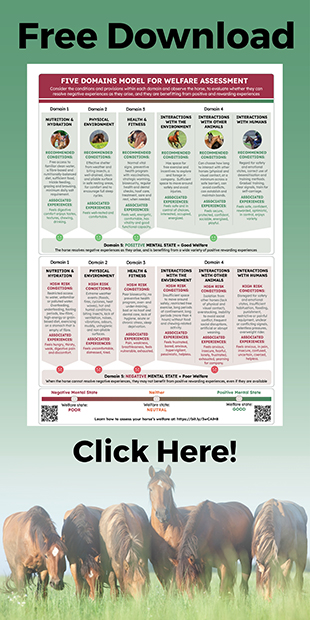
Equine Voice, launched in 2026 by equine behaviourist Nicky Ross, is a freemium app available at equinevoice.com. It combines structured behavioural observation tools, an AI-powered Behaviour Interpreter, and an eight-module Behavioural Foundation grounded in peer-reviewed science, including the Five Domains Model (Mellor et al., 2020) and the Teleonome concept (Wilkins et al., 2026).
The result is something that has not previously existed in the equestrian space: a tool that gives everyday horse owners the same observational rigour as a trained behaviourist, in their pocket, at the yard.
“Horses have been communicating clearly for millions of years. The problem has never been the horses. It’s that we haven’t had the framework to listen properly.” Nicky Ross
Why Now
Equine welfare research has advanced significantly in the past decade. We understand more than ever about affective states, bidirectional physiological coupling between horses and humans, herd dynamics, and the neurological basis of fear and stress responses. Yet the vast majority of horse management practice remains rooted in tradition, habit, and dominance-based assumptions that the science has long since moved on from.
Equine Voice exists to close that gap. It is not a training app. It does not tell users what to do with their horses. Its philosophy is firmly horse-led: observe first, interpret second, and let the horse’s signals guide every decision.
From Observations to a Complete Picture
What makes Equine Voice genuinely different is not any single feature, but what happens to the data over time.
The app builds and analyses the growing bank of observations a user records — finding patterns in individual and herd behaviour that would be invisible to anyone looking at a single incident in isolation. Those patterns can illuminate seasonal changes, flag possible health markers before they become clinical concerns, and map shifts in social dynamics within a herd.
This matters because behaviours that are routinely labelled as training problems — resistance, tension, unpredictability, unwillingness — often look very different when viewed as part of a complete picture of a horse’s affective state. Equine Voice gives users the tools to build that picture systematically, and the interpretive framework to understand what it means.
The app’s Behaviour Journeys feature structures this process across five stages: Observe, Record, Address, Reflect, and Re-evaluate — a cycle designed to replace reactive responses with genuine understanding.
Plant Finder: A Window Into Your Horse’s Internal World
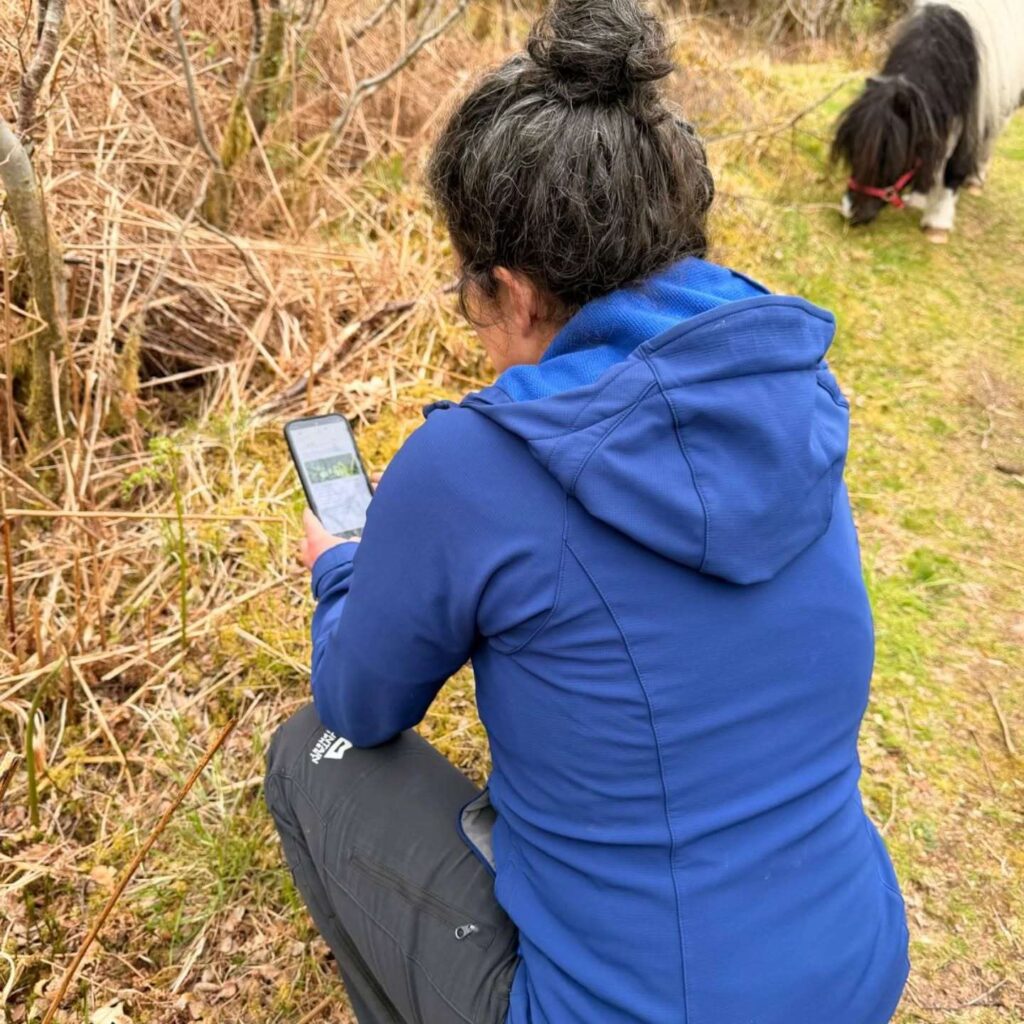
Horses are not passive grazers. When a horse lingers near willow, selects plantain from among the grass, or spends time around chamomile, that choice is not incidental. Horses have spent millions of years developing an extraordinary sensitivity to the properties of plants in their environment — and what they choose to interact with can offer a remarkable window into their internal state.
Plant Finder allows users to identify any plant their horse is showing interest in and receive immediate welfare-relevant context from a curated database covering plants across both the Northern and Southern hemispheres. The properties of each plant — anti-inflammatory, calming, digestive, analgesic — become a lens through which the horse’s behaviour takes on new meaning. A horse drawn repeatedly to certain plants is not simply foraging. They may be communicating something about how they feel.
That context links directly to the Enrichment Planner, where what a horse seeks in the field can inform the enrichment opportunities most likely to support their wellbeing. The plant observation becomes part of the horse’s broader profile — another thread in the complete picture the app is always building.
“When a horse chooses a plant, they are not browsing. They are communicating. Plant Finder gives that communication a language the owner can read.” — Nicky Ross. Image courtesy Equinevoice.com
What the App Does
Equine Voice provides horse owners and equine professionals with a structured system for understanding, recording, and responding to equine behaviour. Core features include:
- Behavioural Foundation — eight science-based lessons covering Affective States, Communication Signals, Herd Dynamics, movement, foraging behaviour, enrichment, personal space, and ridden and handling contexts
- Behaviour Log (Observation Journal) — a structured tool for recording daily observations with ethological consistency
- Behaviour Journeys — a guided five-stage process (Observe → Record → Address → Reflect → Re-evaluate) for working through specific behavioural concerns
- Behaviour Interpreter — an AI feature that helps users interpret observed behaviours within their scientific and contextual framework
- Plant Finder — camera-based plant identification linked to a welfare database spanning both hemispheres, revealing what a horse’s foraging choices may indicate about their internal health
- Signals Guide — a translation guide to equine communication signals, drawing on the body of ridden and handling behaviour research, accessible to both novice and experienced users across two tiers of detail
- Enrichment Planner — suggests enrichment areas based on the user’s own observations, provides practical steps for implementation, and builds a horse-specific enrichment log by date; enrichment categories are aligned with the World Horse Welfare HEY framework
- Activity Readiness Check — a structured welfare check before ridden or handling sessions
- Owner Mood Check — embedding the emerging science of bidirectional physiological coupling into everyday practice
- Get Social — supporting structured observation and recording of both affiliative and agonistic behaviour within the herd
- Living Picture dashboard — an integrated, evolving view of a horse’s behavioural and wellbeing profile over time
The app supports up to five horse profiles on the paid tier (£14.99/month or £99.99/year) and offers a meaningful free tier with no credit card required.
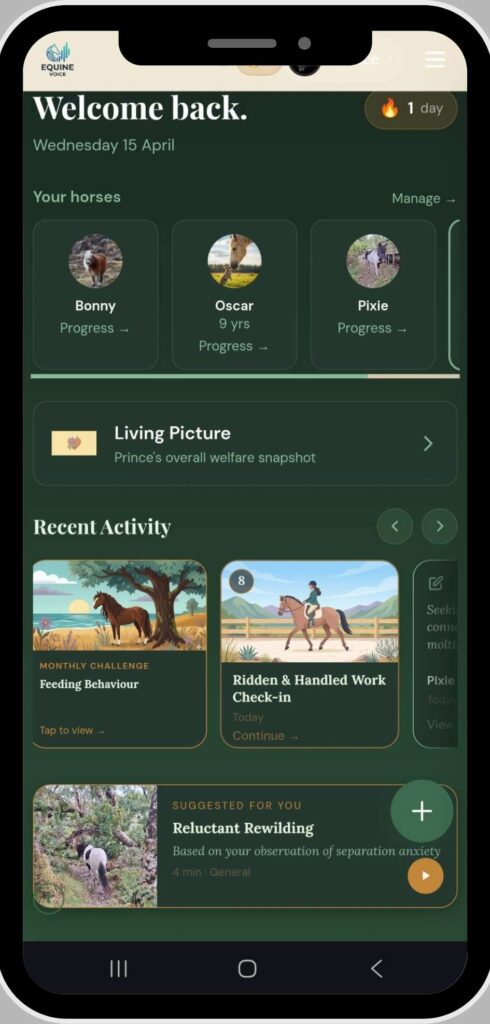
The Equine Voice app provides horse owners and equine professionals with a structured system for understanding, recording, and responding to equine behaviour. Image courtesy equinevoice.com
Enrichment as Welfare Science
The Enrichment Planner treats enrichment as what the science supports it to be: a foundational mechanism for trauma recovery, the development of calmness, and the building of problem-solving capacity in horses.
Rather than offering generic suggestions, the planner draws on the user’s own recorded observations to identify which areas of enrichment their specific horse would most benefit from, then provides practical, actionable steps for creating those opportunities. Every enrichment session is logged against the horse’s profile and date, building a record that feeds back into the Living Picture over time. Enrichment categories are aligned with the World Horse Welfare HEY framework.
The Science Behind It
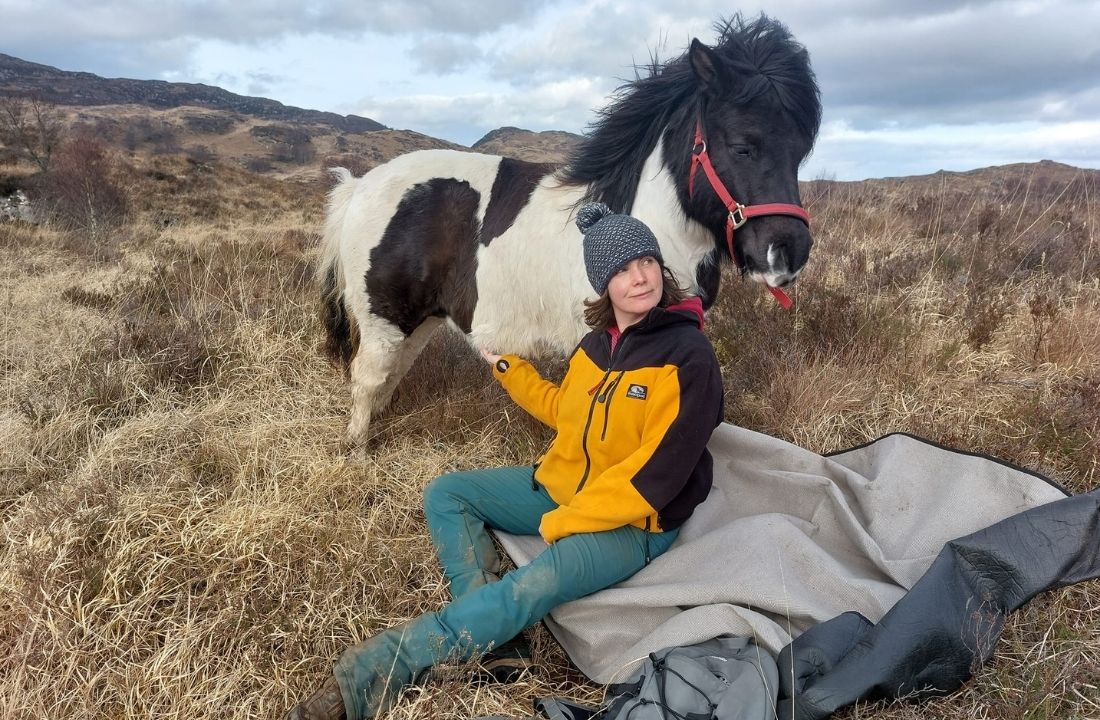
Nicky Ross is an equine behaviourist published in the CABI Animal Behaviour and Welfare Cases Journal (Ross, 2025) and holds IAABC host accreditation. Her three Shetland ponies — Bonny, Pixie, and Oscar, who live freely on the Ardnamurchan Peninsula in the Scottish Highlands — feature in her research and form the living, observable heart of Horse Play Highlands.
The app’s AI Behaviour Interpreter is built on a carefully maintained scientific framework reflecting the Five Domains Model (Mellor et al., 2020) and incorporating findings on bidirectional HRV coupling between horses and humans (Callara et al., 2024, iScience), which directly inform features including the Owner Mood Check and Get Social.
The Teleonome framework (Wilkins et al., 2026) — examining the goal-directed nature of animal behaviour — underpins the app’s core philosophical position: that horses behave with purpose, and that understanding that purpose is the foundation of genuine welfare.
Reception and Reach
Since launch, Horse Play Highlands has reached professionals and horse carers in more than 23 countries. The Horse Play Learning Hub — the applied equine behaviour course that sits alongside the app — has hosted veterinarians, trainers, and welfare officers seeking a more rigorous framework for their practice.
A collaboration with Hartpury University is in progress, including a guest lecture invitation and potential student cohort access, with co-authorship possibilities as the app’s research data capabilities develop.
Availability
Equine Voice is available now at equinevoice.com. The app is free to download with no credit card required. Premium access is available monthly or annually. Learning Hub membership includes Premium app access.