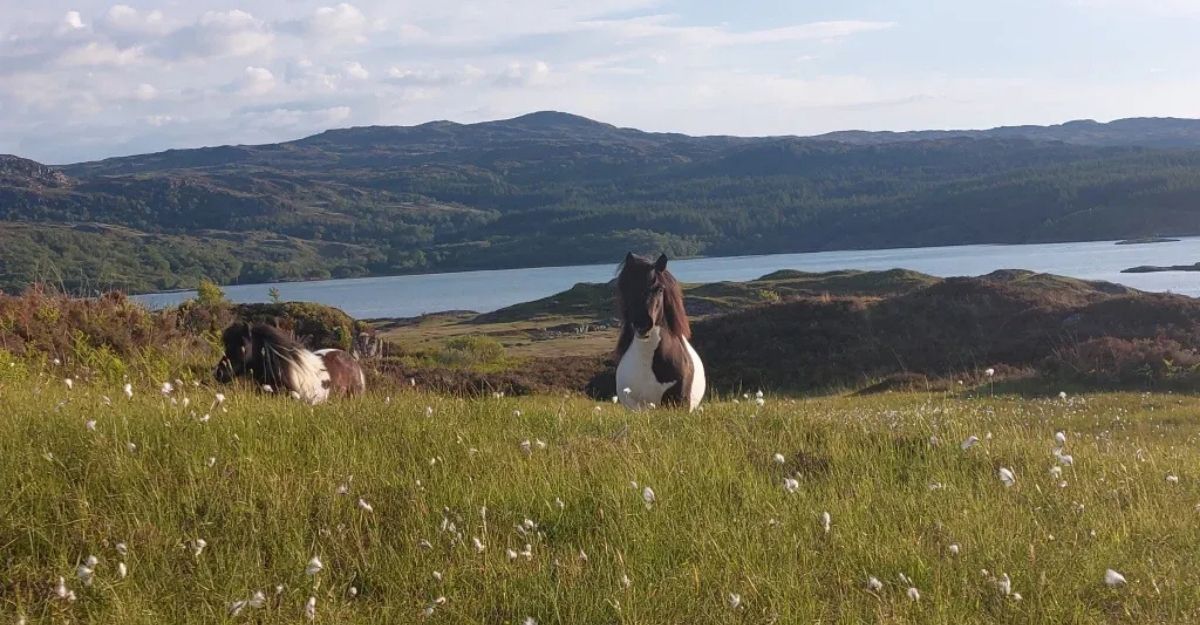

Oscar is doing something interesting near the willow hedge again. He has been doing it for three days now — not grazing it exactly, more lingering, approaching and withdrawing, the way horses do when something has caught their attention but they haven’t quite decided what to do with it yet. If I weren’t watching carefully, and if I didn’t have three days of observations recorded alongside everything else I know about how he has been moving and behaving, I might miss it entirely. Or worse, I might see it and not know what to do with it.
That gap — between noticing and understanding — is where I think most of us spend a lot of our time with horses. We are observant people, most of us. We notice things. But noticing is only the beginning of observation, and observation without a framework is just watching.
Noticing is only the beginning of observation. Observation without a framework is just watching.
The Tool Shapes What You See
I have been thinking a lot lately about how the tools we use to look at horses determine what we are actually capable of seeing. This is not a new idea in science — the instrument shapes the data, as any researcher will tell you — but it is one we rarely apply to our everyday interactions with horses.
Most of us observe our horses through the lens of whatever framework we absorbed first. For many people, that framework is still quietly rooted in dominance theory, in the idea of a hierarchy to navigate or a position to establish. Even those of us who have moved on from that language can find its assumptions shaping what we notice and what we conclude.
The science tells us something different. Herd structure in free-living horses is built through complex affiliative relationships, not linear hierarchies. What looks like stubbornness is often pain. What looks like disobedience is frequently anxiety. What presents as a training problem has, in many cases, been a welfare signal escalating quietly for some time — visible only in retrospect, once you know what you were looking at.
The question is not whether we accept this science. Most of us do, in principle. The question is whether the tools available to us actually help us apply it — consistently, cumulatively, and in the ordinary moments at the yard, not only when something has already gone wrong.
What Structured Observation Reveals
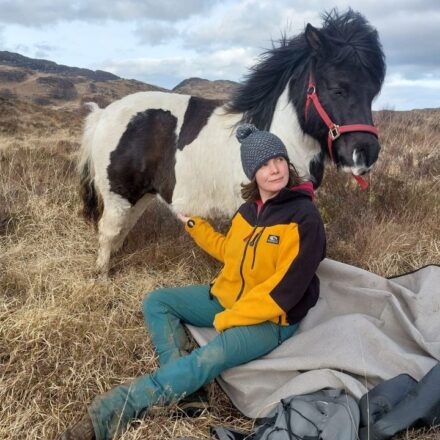
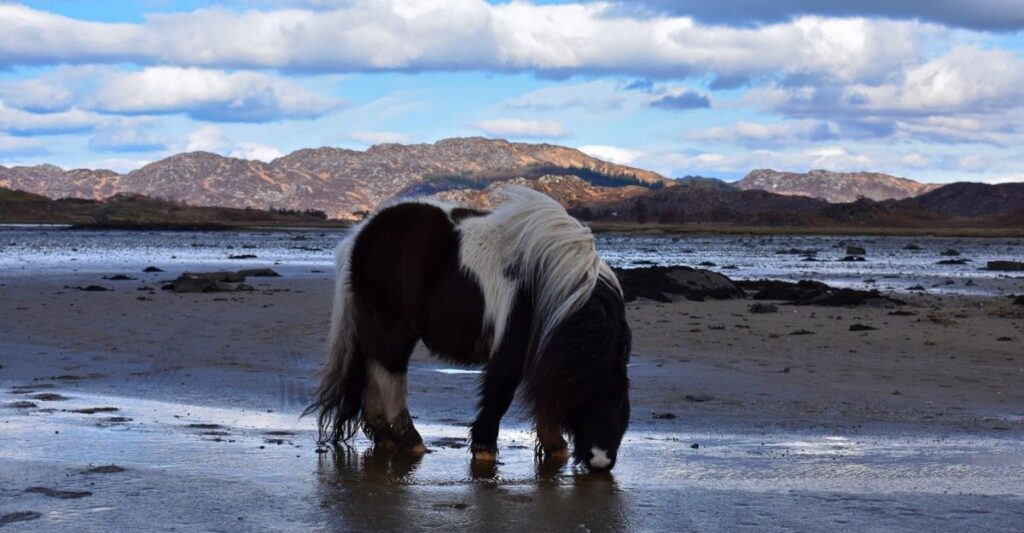
I am an ethologist by training and inclination, and I have spent years watching Bonny, Pixie, and Oscar — my three Shetland ponies, who live freely on the Ardnamurchan Peninsula in the Scottish Highlands — with the kind of structured attention that ethological observation requires.
What I have learned, repeatedly and sometimes humblingly, is that structured observation reveals things that casual watching simply cannot.
It reveals patterns. A behaviour that seems puzzling or concerning in isolation often makes complete sense when viewed against the backdrop of everything that preceded it — the change in weather, the shift in the herd dynamic, the three days of something slightly different in the way a horse is moving or engaging. It reveals seasonality. It reveals the early, quiet signals that precede the louder ones we tend to wait for before we act.
It also reveals what is not there. A horse who has stopped offering certain behaviours — who no longer initiates contact, who has become quieter in ways that look like settling but feel, on careful observation, more like withdrawal — is communicating something important. Learned helplessness is one of the hardest things to see precisely because it presents as absence rather than presence.
You can only notice an absence if you have been paying attention to what was previously there.
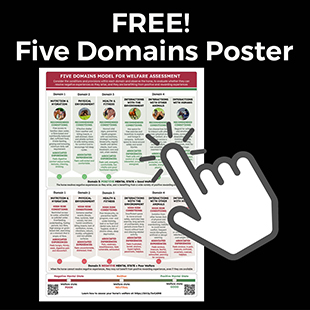
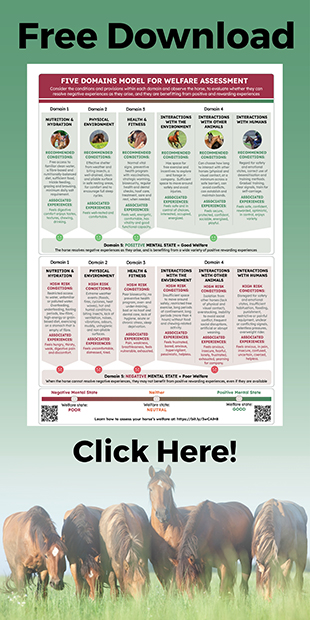
The Five Domains Model gives us a framework for understanding a horse’s affective state in full — not just what they are doing, but what they are experiencing. The Teleonome framework, developed by Wilkins and colleagues, reminds us that animal behaviour is goal-directed: horses are always doing something for a reason, even when that reason is not immediately legible to us.
Together, these frameworks transform observation from a passive activity into an active one. You are not just watching. You are asking a question and waiting, with genuine curiosity, for the answer.
You are not just watching. You are asking a question and waiting, with genuine curiosity, for the answer.
Building the Complete Picture
The reason I built Equine Voice — a horse behaviour and welfare app rooted in these frameworks — was to make this kind of structured observation available to horse owners who have not had formal ethological training. Not as a simplified version of the science, but as a genuine application of it: consistent, cumulative, and grounded in what we actually know about how horses experience the world.
What the app makes possible, over time, is a comprehensive picture of a horse’s affective state. Not a snapshot from a single session, but a profile built from daily observations — patterns in individual and herd behaviour that are invisible in any single incident but become clear when you can see them laid out over weeks and months. Seasonal shifts. Early health markers. Changes in social dynamics within a herd.
Oscar’s three days near the willow hedge is a good example of how this works in practice. Willow contains salicylate compounds — natural analgesics that horses have been self-selecting for far longer than we have been domesticating them. Placed alongside everything else recorded that week, his behaviour near the hedge becomes a data point: not a diagnosis, but a question worth asking. Is he moving differently? Has anything changed in his environment? The observation on its own is interesting. The observation as part of a complete picture is meaningful.
This is one small illustration of a much larger principle. Behaviours that are routinely labelled as training problems — resistance, tension, unpredictability, unwillingness — look very different when viewed as part of a complete picture of a horse’s affective state. They are not problems to be solved. They are communications to be understood.
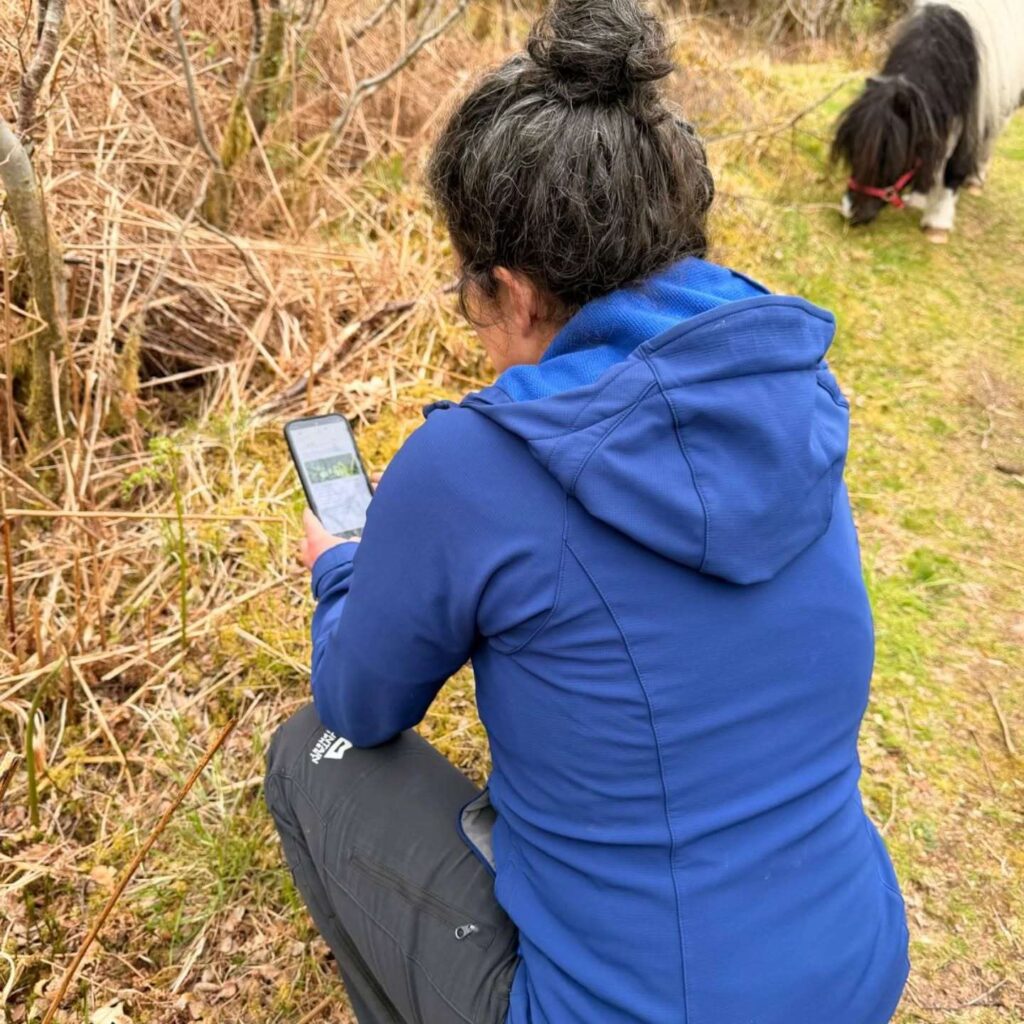
I built a horse behaviour and welfare app rooted in science to make structured observation available to horse owners who have not had formal ethological training. Image courtesy Equine Voice.
Bids for Connection
There is something else that structured observation makes possible, and it is perhaps the thing I value most — both in my own practice and in what I hope Equine Voice offers people.
When we learn to observe without an agenda, something shifts. We stop arriving at the field with a plan that the horse must fit into, and we start arriving with attention — open, patient, genuinely curious about what we will find. And horses notice. They are exquisitely sensitive to whether a person is present with them or simply moving through the motions of a routine.
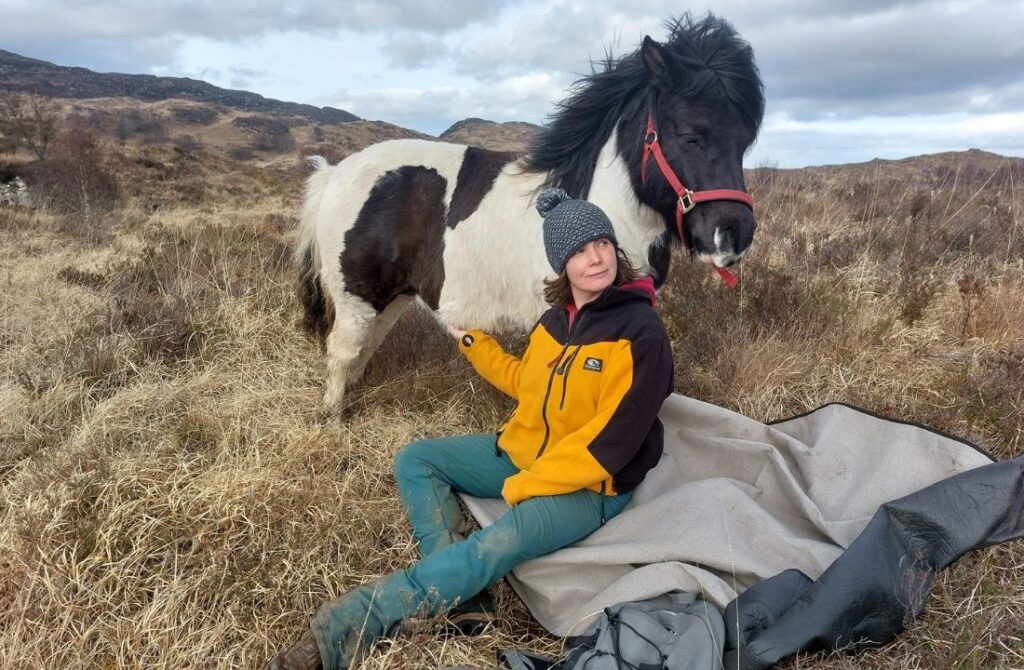
Horses make bids for connection constantly. A soft glance held a moment longer than necessary. A slow step toward you that stops just short of your space and waits. A head turned in your direction when you have not called for it. These are not random behaviours. They are invitations, and how we respond to them — or whether we notice them at all — shapes the relationship we are building with that horse.
When we recognise a bid for connection and respond to it appropriately — not with a treat, not with a task, but with a quiet acknowledgement, a moment of genuine reciprocity — something important happens. The horse learns that their communications are received. That this particular human is paying attention. That it is safe to keep offering.
This is what the Up Close and Personal section of Equine Voice’s Behavioural Foundation explores: not how to manage proximity or establish personal space as a training concept, but how to understand the gradual, trust-based process by which horses allow someone into their world. Horses only invite their closest companions into their personal space. When a horse begins to close the distance between you without being asked, they are telling you something about how they experience your presence. The question is whether we are equipped to hear it.
When we recognise a bid for connection and respond to it, the horse learns that their communications are received. That it is safe to keep offering.
Image courtesy of Equinevoice.com.
A structured observational framework does not make this less human, or less felt. It makes it more possible. When you have been paying attention consistently — when you know this horse’s baseline, their patterns, the particular way they signal that something is off or that something is good — you are not guessing at what their behaviour means. You are in conversation. And conversation, unlike instruction, requires two people to be present.
What Attention Makes Possible
Oscar has moved away from the willow hedge now. He is grazing quietly alongside Pixie, their shoulders almost touching — one of those small affiliative moments that horses exchange constantly when they feel safe enough to be that close. I have logged what I saw this week. I do not know yet exactly what it means. But I am paying attention, and I have three days of context to think with, and that changes what I am able to offer him.
That is what I hope structured observation gives people: not certainty, but better questions. Not a system that tells you what to do, but a framework that helps you understand what you are seeing. And, in understanding it, the possibility of a relationship with your horse that is built not on compliance or routine, but on genuine mutual recognition.
The science has always been clear that horses are communicating. What changes, when you give yourself the tools to listen properly, is that you start to hear them.
References:
Mellor, D.J., Beausoleil, N.J., Littlewood, K.E., McLean, A.N., McGreevy, P.D., Jones, B. and Wilkins, C., 2020. The 2020 five domains model: Including human–animal interactions in assessments of animal welfare. Animals, 10(10), p.1870.
Wilkins, C.L., Henshall, C., Lykins, A.D., Mellor, D.J., Fillios, M. and McGreevy, P.D., 2026. The teleonome: a framework for understanding animal welfare integrating adaptive capabilities, affective regulation, agency, and environmental affordances. Frontiers in Animal Science, 7, p.1768519.
Callara, A.L., Scopa, C., Contalbrigo, L., Lanatà, A., Scilingo, E.P., Baragli, P. and Greco, A., 2024. Unveiling directional physiological coupling in human-horse interactions. Iscience, 27(9).
Ross, N., 2025. Changing Tides by Changing Minds–Developing Agency to Enhance Welfare Around Horse/Human Interactions. Animal Behaviour and Welfare Cases, (2025), p.abwcases20250013.