Money has always existed in equestrian sport. What has changed is scale, speed and visibility.
Today’s competition horse operates within a global marketplace. Young horses sell for six figures. International circuits demand regular travel. Training systems and supplements are marketed with scientific language. Success builds financial value almost instantly.
When horses become economic assets, decisions inevitably become influenced — even subtly — by return on investment.
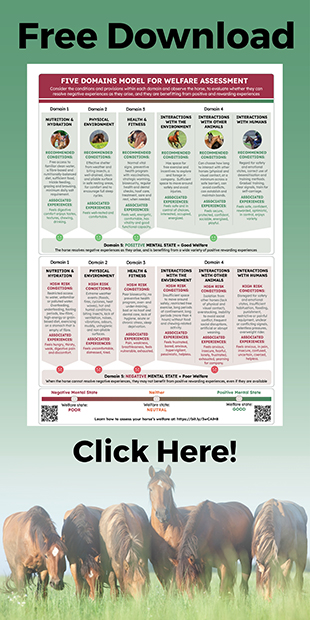
Welfare science invites us to look beyond intention and examine impact. It does this by examining the teleonome – the integrated system of traits, capabilities and limitations, through which the horse maintains life and pursues biological goals. Using the Five Domains model — nutrition, physical environment, health, behavioural interactions, and mental state — welfare is assessed not simply by the absence of injury, but by the animal’s capacity to regulate and adapt. Crucially, the fifth domain integrates all others: how does this affect how the horse experiences life?
When commercial systems influence management, training, and breeding, each domain can be affected.
Racing: Performance, Risk and Physiological Load
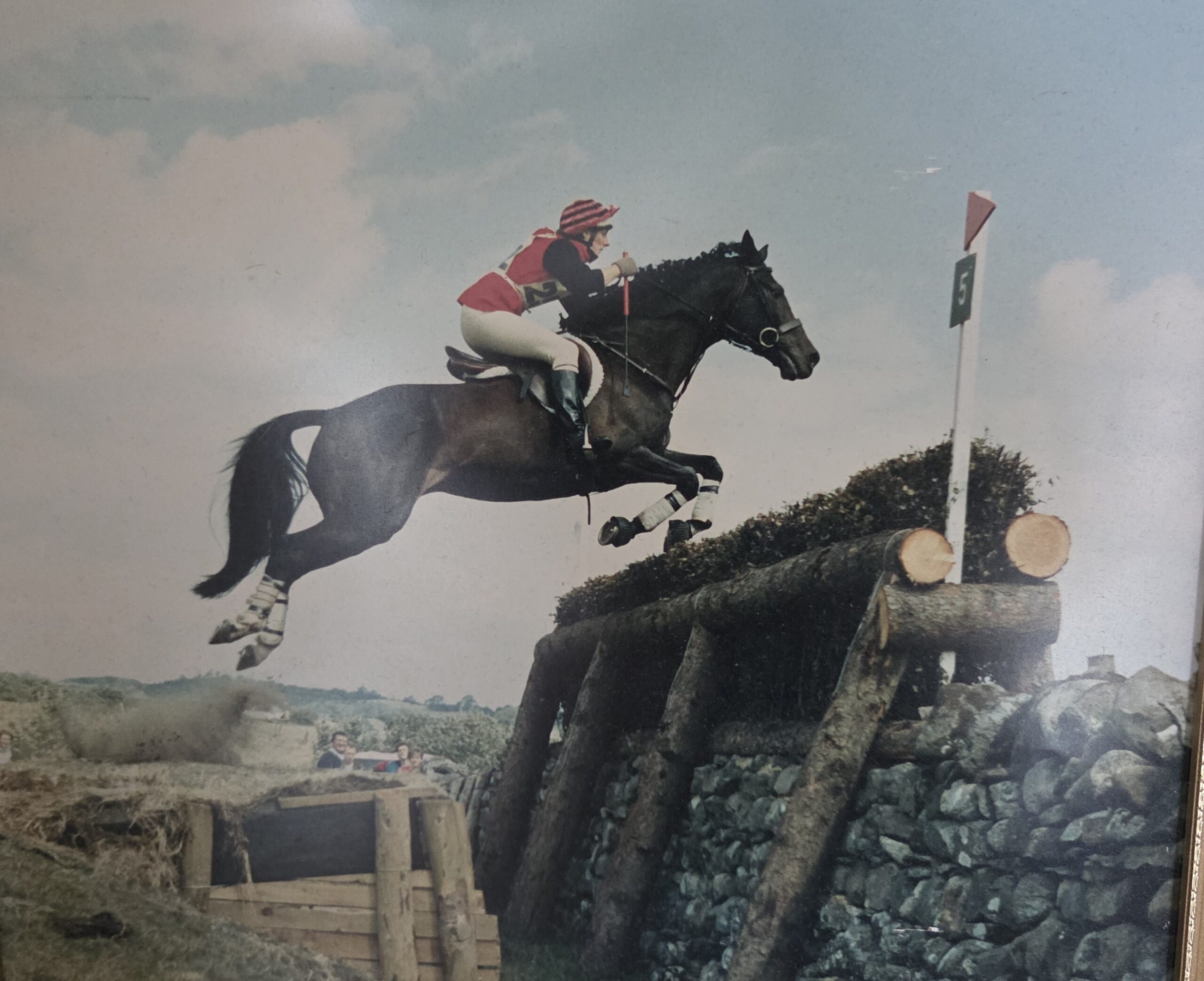
British racing generates significant revenue through media rights and betting. Venues such as Cheltenham Racecourse and events like the Grand National fund employment, veterinary innovation, and injury surveillance systems.
Commercial income has supported welfare reform, including fence redesign and data-driven safety monitoring.
However, racing also provides one of the clearest examples of performance economics intersecting with biology. Research in equine orthopaedics shows that immature musculoskeletal systems are more vulnerable to cumulative load. While controlled early exercise can stimulate bone adaptation, high-intensity competition at young ages increases risk if loading exceeds adaptive capacity. Economic incentive for early return may compress training timelines.
From a Five Domains perspective:
- Health: cumulative microdamage, soft tissue strain, recovery compression
- Environment: frequent transport and stabling
- Behaviour: limited social turnout during intensive training
- Mental state: stress associated with travel, confinement, and high-arousal competition
Commerce funds reform — but can also bring horses closer to physiological thresholds.
What the Five Domains Ask Us to Consider
The Five Domains model shifts welfare assessment from “Is the horse sound?” to “What is the horse’s lived experience?”
- Nutrition – Is feeding species-appropriate and forage-led, or primarily driven by energy output demands?
- Physical Environment – Do stabling, transport, and schedules allow rest and comfort?
- Health – Are training loads aligned with tissue adaptation and recovery science?
- Behavioural Interactions – Does the horse have social contact, movement, and agency?
- Mental State – What cumulative emotional experiences does the system produce?
Welfare is cumulative. Small compromises across domains can compound over time.
Show Jumping: Arousal and the Performance System
Elite show jumping horses often receive exceptional veterinary and conditioning support. Investment in diagnostics, physiotherapy, and nutrition is substantial.
Yet welfare extends beyond absence of injury. High-level competition demands horses maintain states of elevated arousal. Moderate arousal can enhance performance, but chronic high arousal is associated with sustained cortisol elevation, altered heart rate variability, and increased muscular tension.
In spectacle classes pushing maximal scope, repeated exposure to extreme physical demand raises questions about cumulative musculoskeletal and neuroendocrine strain. A horse may perform willingly, but welfare science asks whether cumulative stress is being monitored — or simply assumed absent because results remain strong.
Learning Theory: Why Pressure Matters
Modern equestrian training often relies on negative reinforcement — pressure applied, then released when the desired response occurs. Correctly applied, this should not be harmful.
Welfare concerns arise when:
- Pressure is applied with poor timing or excessive intensity
- The horse has limited opportunity to avoid or control the stimulus
- High-arousal states are repeatedly induced for performance
- Conflict behaviours (tail swishing, mouth opening, tension) are suppressed rather than investigated
Chronic exposure to poorly managed pressure can lead to stress responses, learned helplessness, or heightened reactivity. Learning theory does not condemn performance sport. It asks whether training maximises clarity and agency — or relies on escalating and unavoidable pressure under competitive demand.
Dressage: Biomechanics, Posture and Incentive
Dressage reveals how judging trends can influence biology.
Research using rein tension measurement, thermography, and heart rate variability has examined the physiological impact of restrictive head–neck positions. Sustained hyperflexion has been associated with increased muscular tension, altered airway mechanics, and behavioural indicators of discomfort. These restrictions override the horse’s teleonome – the evolved biomechanical system they rely on for balance, vision, and breathing.
Posture alters load distribution throughout the skeleton and prevents the horse from adjusting their own body when they feel the need to do so. Repetition and duration matter. From both a Five Domains and learning theory perspective, if a posture is maintained through sustained pressure rather than voluntary carriage, the mental domain is affected.
Few riders intend compromise. But incentive structures matter. What is rewarded becomes replicated — in training, breeding, and market demand.
Ownership, Stability and Chronic Stress
Rising purchase prices and livery costs create economic pressure beyond elite sport.
Behavioural research consistently shows horses require:
- Social contact
- Continuous forage access
- Movement opportunity
- Environmental predictability
Frequent yard changes, restricted turnout, or competition-driven routines may undermine behavioural and mental domains, even when veterinary care is high. Chronic stress may present subtly — tension under saddle, gastric ulceration, stereotypic behaviour, reduced resilience.
Time — gradual progression, consistent management, patient retraining — remains one of the strongest welfare safeguards. It is also economically inefficient.
Breeding: Welfare Before Birth
Selective breeding has produced extraordinary athletic capacity. Yet rapid commercial response to winning bloodlines can narrow diversity and amplify extreme traits.
Selection for exaggerated movement, scope, or reactivity disrupts deeply integrated physiological and behavioural systems, influencing joint loading, tendon resilience, and stress sensitivity in ways that may not manifest until adulthood. Conformation and temperament shape lifetime welfare across all domains.
When markets reward short-term brilliance, selection prioritizes immediate performance over the biological flexibility horses need for adaptive resilience. Long-term durability receives less emphasis. Welfare begins before the first ridden session.
Alignment — or Accountability?
Equestrian sport is not unethical because it involves money. Commercial investment has funded diagnostics, nutritional science, safety research, and professional standards that have improved care.
But welfare science makes one thing clear: good outcomes depend on systems, not intent.
If economic structures reward rapid progression, exaggerated movement, early competitive success, or narrow peak-performance windows, those incentives shape training, breeding, and management — regardless of individual goodwill. Alignment does not happen by accident.
Judging criteria must reflect biomechanics and relaxation, not fashion. Breeding decisions must value durability and stress resilience, not only brilliance. Training standards must prioritise clarity, agency, and tissue-adaptation timelines. Injury data must be transparent, not reputationally inconvenient.
Without structural alignment, welfare is reactive. With alignment, economics can strengthen it.
Horses cannot negotiate their schedule. They cannot request longer recovery and cannot refuse escalation of pressure. That responsibility rests entirely with us.
The real cost of performance is not measured in prize money. It is measured in cumulative physiological load and behavioural restriction, which generate negative mental experiences the horse.
The future of equestrian sport will not be decided solely in arenas or on racecourses. It will be decided in boardrooms, judging panels, breeding sheds, and training yards — wherever commercial incentives are set.
The question is no longer whether we can afford to prioritise welfare. It is whether the sport can afford not to.
References
- Wilkins et al., The teleonome: A framework for understanding animal welfare integrating adaptive capabilities, affective regulation, agency, and environmental affordances. Frontiers in Animal Science, 2026; 7: 1768519
- Mellor DJ. Updating animal welfare thinking: moving beyond the “Five Freedoms” towards “A Life Worth Living”. Animals. 2016;6(3):21.
- McGreevy PD, McLean AN. Equitation science. Wiley-Blackwell; 2010.
- Clayton HM, Singleton W, Lanovaz JL. Physiological responses of horses during different training regimens. Equine Vet J Suppl. 2013;45:48–53.
- Waran NK. The welfare of horses in competition and breeding. Vet J. 2012;194:177–182.
- Hinchcliff KW, Kaneps AJ, Geor RJ. Equine Exercise Physiology. Elsevier Health Sciences; 2013.