Across the UK, a quiet but significant shift is underway in riding schools — not driven by new rules or audits, but by a deliberate rethinking of how horses experience their daily lives.
The Riding School Futures Project, led by ABRS+ and guided by Equitation Science and Culture consultant Lisa Ashton, is a culture-change initiative designed to support riding schools in embedding welfare at the level where it matters most: everyday practice. Its focus is not simply on what horses do, but on how they experience what they do — physically, psychologically, and socially.
The project brings together a first cohort of diverse riding schools — Horse Riding Cornwall, Team Tutsham, Hope Meadows, Ebony Horse Club, Kingsmead Equestrian Centre, and Stepney Bank Stables — each working within very different contexts, but united by a shared commitment to inclusion, welfare, and long-term sustainability.
Integrating welfare frameworks into lived experience
At the heart of the project is the practical integration of two well-established, evidence-based frameworks:
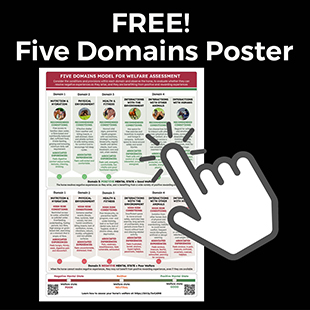
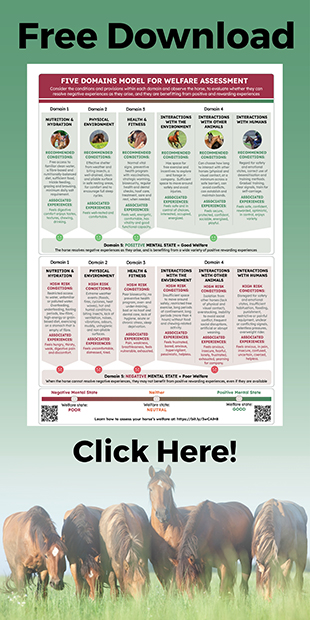
- the Five Domains Model for animal welfare assessment, and
- the International Society for Equitation Science (ISES) 10 Principles of Horse Training.
Rather than treating these as abstract checklists, participating schools are applying them as tools for reflection, decision-making, and redesign — from training methods and lesson structures, to housing, social contact, and opportunities for choice.
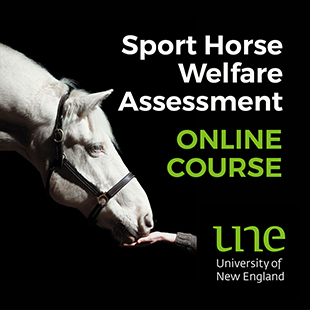
A core requirement of the project is that staff members enrol in the University of New England online course, Applying the Five Domains Model to the Welfare Assessment of Sport and Recreation Horses. The course provides a shared conceptual foundation, equipping teams to think beyond surface indicators and to consider how management and training shape horses’ mental states over time.
Although the course was originally designed before the term was widely used in welfare science, its focus aligns closely with what is now being described as a teleonomic approach: understanding welfare’s Five Domains in terms of the horse’s teleonome – their evolved capabilities for detecting what matters to them, evaluating situations, and responding in ways that support their viability and agency. In this sense, Bernard Rollin’s concept of telos — the “horseness of the horse” — is extended into a more dynamic view of how their nature is expressed in real environments.
Seeing horses through a different lens
Early reflections from participating schools suggest that this shift in perspective is already taking root.
“Working on the Future Schools project has really made us pause and look at our horses through a different lens,” writes Team Tutsham. “It’s encouraged us to think more deeply about what it truly means to be a horse — not just in how they work with us, but in how they experience their world… their need for connection, movement, choice. This project is shaping how we train, manage and partner with our herd, keeping their individuality and wellbeing at the centre of everything we do.”
At Kingsmead Equestrian Centre, the emphasis on learning and shared responsibility is equally clear:
“We feel privileged to be part of this project; such a great opportunity to learn and grow to ensure each and every horse here has a life worth living. And the best bit is it won’t only be our horses who feel the benefits. Be the change!”
These reflections echo what has been visible in the project’s early practical outcomes: small but meaningful changes that improve predictability, controllability, social contact, and comfort — the foundations of mental security.
Building futures, not just fixing problems
The Riding School Futures Project is not about finding fault with riding schools, nor about imposing a single model of “good practice”. It is about building capacity, confidence, and systems — enabling teams to align welfare science, learning theory, and ethics in ways that make sense within their own context.
This context-sensitive approach is deliberate. By applying shared welfare mechanisms — including the Five Domains Model and the ISES Principles — across diverse environments, the project focuses on how change happens, not just whether it does. That is what allows meaningful, measurable improvements in horses’ lived experience to emerge across very different riding schools, and why the work has relevance well beyond a single sector.
This is what makes the project applicable across the British Equestrian landscape: a welfare intervention designed to work with real-world complexity, rather than in spite of it.
As this project unfolds, it offers a glimpse of what welfare-centered equestrian culture can look like when it is cultivated deliberately: reflective rather than defensive, evidence-based rather than habitual, and grounded in respect for horses as sentient beings with their own perspectives on the world.