
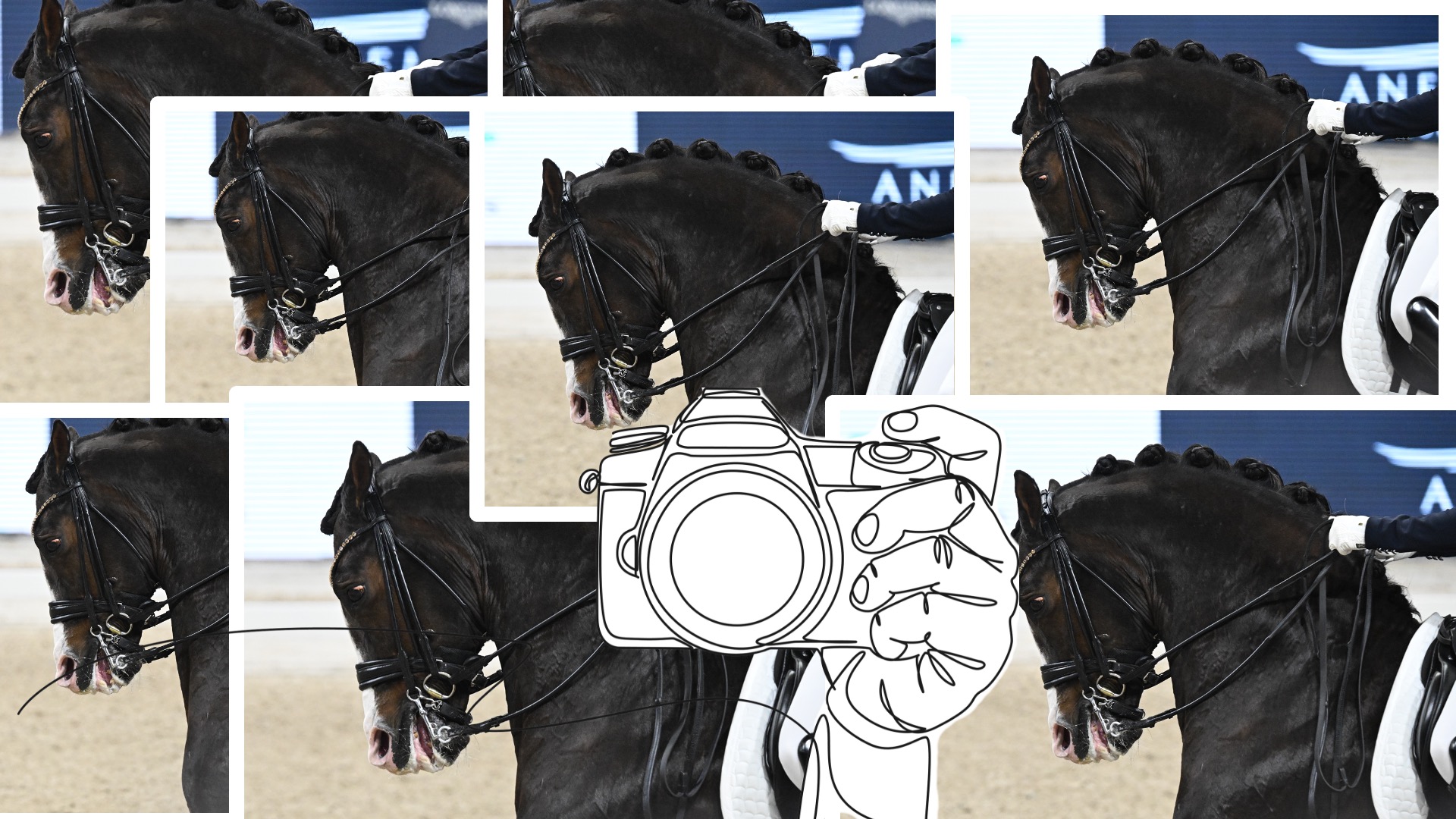


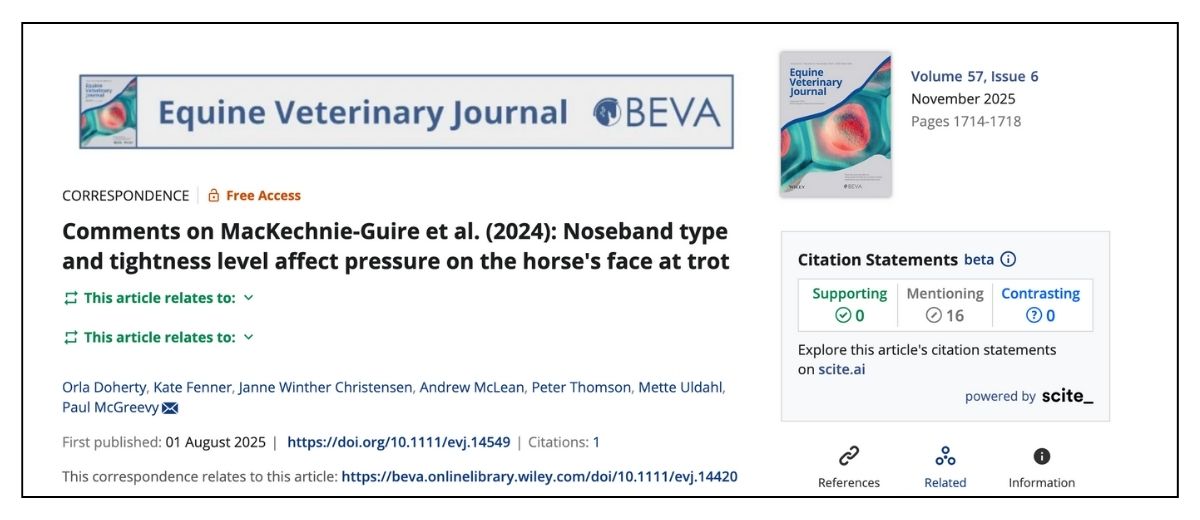

A Reply to Response to Comments on ‘Facial pressure beneath a cavesson noseband adjusted to different tightness levels during standing and chewing”
In academic publishing, critique and reply are essential to scientific progress. This letter—declined by the Equine Veterinary Journal—is published here to complete the public record. It clarifies key methodological issues in a study of noseband pressures and highlights the importance of open discourse for equine welfare policy.
The Perfect Bit for your Horse
Emeritus Professor David Mellor—architect of the Five Domains Model—explores the biological and behavioural evidence showing that all bits, regardless of design, cause mouth pain. Drawing on decades of welfare science, he argues that the perfect bit is the one never placed in a horse’s mouth.
Think Blue Tongues may be Harmless in Elite Sport Horses? Think Again.
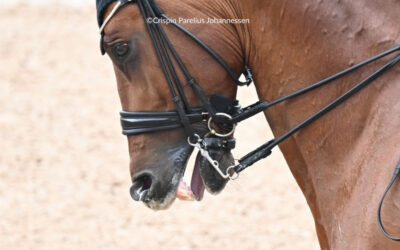
Unlike most reports quoting only veterinarians, this analysis comes from Dr James Cooling—a medical doctor, qualified bit-fitter, and rider. He explains why blue tongues in elite horses are not cosmetic, but clear evidence of pressure, pain, and compromised welfare.

The Mouth-Iron-Free Solution for Sudden Death in the Racehorse
In this final paper, the late Dr Robert Cook reviews decades of anatomical, physiological, and behavioural research showing how bits cause pain, breathing restriction, and performance loss in horses. He argues that allowing bit-free options across all disciplines would improve welfare, enhance safety, and restore public trust in equestrian sport.
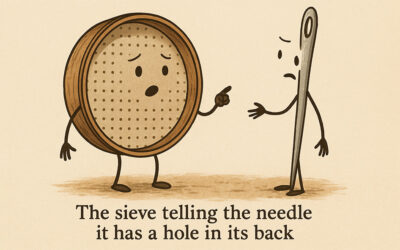
Illustrating Two Approaches to Equine Sports Welfare Research
Not all opinions are equal, and not all research holds water. A simple saying helps illustrate why that matters. There is an Indian saying that captures the situation where someone with many foibles criticises someone with very few: “That is like the sieve telling the...

Foam, Fear, and False Signals: Why the FEI’s New Ban on Artificial Saliva Matters
This week, the International Federation for Equestrian Sports (FEI) announced an emergency ban on artificial foam-producing substances used in horses’ mouths. The new veterinary rule, effective July 1, 2025, prohibits all products that artificially induce or imitate...
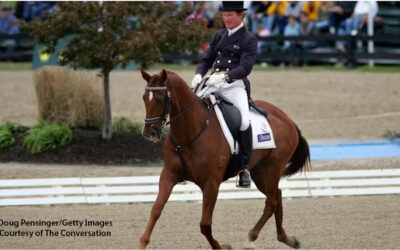
Horse whipping is painful and cruel. The latest incident shows why it should be banned
Anne Quain, University of Sydney and Cathrynne Henshall, Charles Sturt University. Image Doug Pensinger/Getty Images Last week, the peak body for equestrian sport in Australia suspended a prominent member after footage allegedly depicted Australian Olympic dressage...

Machinations About Mouth Pain in Dressage Horses
Commonly employed husbandry, training and other management practices used with racehorses and sports horses are being seriously questioned on welfare grounds. These concerns have been outlined in detail for Thoroughbreds by Garnham (2024a) - the penname under which...

From Chaos to Clarity: How EquiCare is Transforming Horse Management
Nicole knew she had a problem. As a professional rider and coach, she juggled the endless responsibilities of horse care—vet visits, farrier appointments, training schedules, competition prep. But no matter how many whiteboards, sticky notes, or phone reminders she...

Bit Blindness and Questioning the Concept of Pain-induced Musculoskeletal Lameness
Bit Blindness The term “bit blindness”, coined in 2020, emphasises that after its inception four millennia ago, bit use in horses has long been normalised [1,2]. Moreover, not only has the use of bits been normalised, so too were the distinctive behaviours associated...

Bit-Induced Mouth Pain and Wider Equine Welfare Assessments Ignored in a Paper on Bridle and Bit Fit
A critique of “The Role of the Equestrian Professional in Bridle and Bit Fit in the United Kingdom" In this compelling critique, Professor Emeritus David Mellor examines a recent study published in Animals by Kathryn Nankervis, Jane Williams, Diana Fisher, and Russell...

Critique of the film Horses and the Science of Harmony
A critique of the Horses and the Science of Harmony film by Emeritus Professor Robert Cook, FRCVS, PhD. “Horses and the Science of Harmony” is, as stated in its introduction, a “Full length feature film, seen through the lens of cutting-edge science and groundbreaking...

European Veterinarians Highlight Relationships Between Animal Behaviour, Training and Welfare
The joint position paper by the members of the Federation of Veterinarians of Europe (FVE) emphasises the critical importance of understanding animal behaviour and training for promoting the welfare of dogs, cats, and horses. Adopted unanimously by the FVE General...

Seven Pillars of Deception to Delay Action on Horse Welfare
Scenario Consider a prominent international organisation that has global leadership and regulatory roles in a well-known area of competitive activity involving animals. Participants are members of a global elite, lauded and applauded for their mastery of the...

Improving Sports’ Horse Welfare: A Way Forward
Many features of the Thoroughbred Horseracing sector have been seriously challenged from an animal welfare viewpoint[1]. Their character is so explicit and striking that immediate action is required by implementing sector policy changes and updating codes of practice...

The Five Domains of Horse Welfare
Horse welfare is difficult to talk about, almost impossible sometimes! It is probably because many people care so much about horses and because the factors that affect their welfare are many, and the way they interact is complex and dynamic. It is not helped by the...

Thoroughbred Horse Welfare Challenges: From Rape to Relegation
Written here as a poem, each verse is structured as a three-line haiku. The haiku is a Japanese poetic form, in this case consisting of seventeen phonic syllables in a five-seven-five pattern. Traditionally, haiku evoke images of the natural world. The author's aim:...

A Bit-FREE, Pain-FREE Future for the FREE-Breathing Horse
Without food, a horse’s expectation of life is measured in weeks; without water, in days; without air, in seconds. The purpose of this article is to provide an illustrated sequel to a previous article "Horse Sports’ Option: Ban or be Banned” (Cook 2024). A series of...